The 100% Blackout Sleep Sanctuary
Photon Elimination & Wind-Down Protocol
Transform your bedroom into a perfectly dark sleep environment that supports deep, restorative sleep—then wake you gently with simulated sunrise instead of jarring alarms.
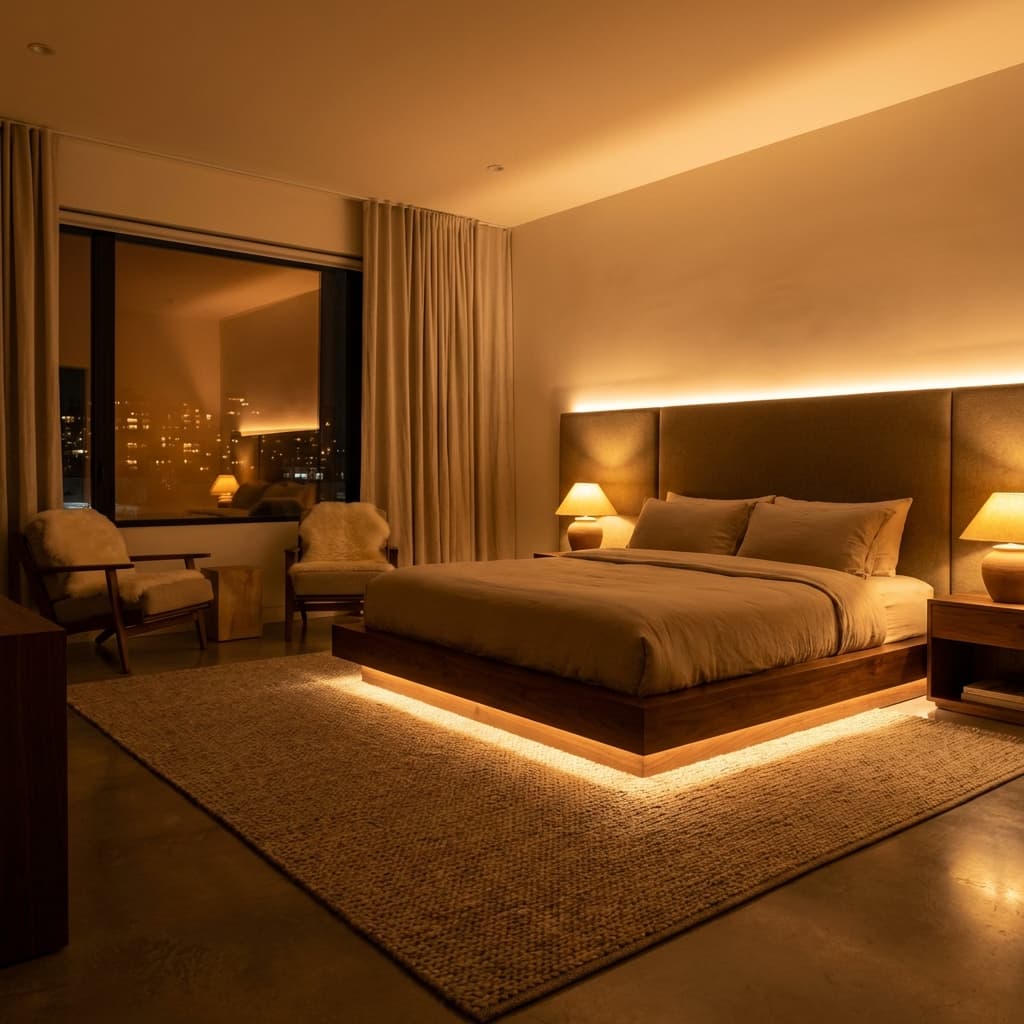
Who Should Follow This Blueprint
- Anyone who wakes up tired despite 'enough' sleep
- Light sleepers who wake at sunrise (or earlier from street lights)
- People who rely on jarring phone alarms and hate the sound
- Shift workers who sleep during daylight hours
- Those in urban environments with significant light pollution
What You Can Expect
- Deeper sleep with more time in restorative stages
- Faster sleep onset (typically 10-20 minutes faster)
- Wake up feeling genuinely rested, not groggy
- More consistent sleep/wake times as circadian rhythm stabilizes
- Reduced middle-of-night awakenings
The Problem
Modern bedrooms are never truly dark. Streetlights filter through curtains, LED standby lights glow from devices, phone chargers blink, and hallway light seeps under doors. This 'light pollution' is invisible to you (your eyes are closed) but still detected by photoreceptors that suppress melatonin and disrupt deep sleep cycles. The result: you sleep 7-8 hours but wake tired.
The Solution
We'll create complete darkness during sleep hours using blackout window treatments and elimination of all electronic LEDs. For nighttime bathroom trips, amber nightlights provide navigation without disrupting melatonin. A sunrise alarm clock gradually brightens to simulate dawn, triggering natural wake-up hormones so you feel alert—not groggy—when you rise.
The Science Behind This Protocol
Sleeping with even dim light (5–10 lux) in the room impairs glucose metabolism and increases heart rate during sleep, signaling the body is in a 'lighter' sleep state even while unconscious.
Obayashi et al., 2019 - PNASDawn simulation (gradual light increase before wake time) reduces sleep inertia—that groggy, disoriented feeling upon waking—by up to 50% compared to abrupt alarms.
Giménez et al., 2010 - Chronobiology InternationalBlue light exposure before bed delays circadian phase by up to 3 hours, meaning you fall asleep later, wake later, and the cycle shifts further each night.
Chang et al., 2015 - PNASSystem Parameters
These are the specific targets this blueprint aims to achieve. Use these values when configuring your setup.
| Time Window | CCT (K) | Intensity | Biological Goal |
|---|---|---|---|
| 20:00 – 22:00 | 2200K (Deep Amber) | < 50 lux | Melatonin Production Begins |
| 22:00 – 06:00 | 0K (Total Blackout) | 0 lux | Deep Restorative Sleep |
| 06:00 – 06:30 | 2700K → 4000K | 0 → 300 lux (gradual) | Natural Cortisol Awakening |
What You Need to Buy
These are our recommended products. Each has been selected for a specific reason—read the explanations to understand why.
Amazon Basics Portable Blackout Curtain
Window Light Elimination
Uses suction cups to seal directly against the window frame for zero light gaps. Velcro tabs allow adjustable sizing for any window. Includes travel bag so you can take it on trips for consistent sleep quality in hotels. Machine washable.
View on Amazon →Philips SmartSleep Wake-Up Light HF3520
Dawn Simulation Alarm
Starts as a dim red glow 30 minutes before your alarm time, gradually brightening to simulate sunrise. Your brain registers increasing light and prepares to wake naturally. Much gentler than a phone blaring. Backup sound alarm if you're a heavy sleeper.
View on Amazon →LOHAS Amber LED Night Light
Safe Nighttime Navigation
For bathroom trips at night, you need some light—but not white or blue light that kills melatonin. These emit pure amber light that allows you to see without disrupting sleep hormones. Automatic light sensor so they turn on when it gets dark.
View on Amazon →Step-by-Step Instructions
Follow these steps in order. Each builds on the previous one.
- 1
Audit your bedroom for light sources. Close the door, turn off lights, lie in bed, and wait 10 minutes for your eyes to adapt. Identify EVERY light source: standby LEDs, charging indicators, smoke detector lights, gaps around doors/windows.
- 2
Install blackout treatment on all windows. Measure carefully—light sneaks through any gap. The Sleepout curtain creates an airtight seal against the glass.
- 3
Eliminate or cover electronic LEDs. Use black electrical tape over standby lights. Unplug chargers that blink. Consider moving your phone to another room.
- 4
Seal the door gap. Light from hallways is a common issue. Use a draft stopper or rolled towel at the bottom. If light leaks around the frame, add foam weatherstripping.
- 5
Position amber nightlights between bedroom and bathroom at floor level. They provide enough light to navigate safely without activating alertness hormones.
- 6
Set up your wake-up light. Position it near your bed at eye level. Set sunrise duration to 30 minutes and experiment with wake sounds—or try no sound at all once you adapt to light-based waking.
- 7
Create an evening wind-down lighting routine. Starting at 8 PM, switch all bedroom lighting to warm (2700K or lower) and dim. Avoid screens, or use aggressive amber-tint night mode settings.
Pro Tips
- Put your phone in another room overnight. This eliminates notification light, blue screen temptation, and forces you to physically get up at alarm time.
- If you can't fully blackout a window, wear a comfortable sleep mask as backup. Silk masks are comfortable for side sleepers.
- Room temperature matters too: 65-68°F (18-20°C) is optimal for most people. A cool room improves sleep quality.
- Keep a small amber flashlight by the bed if needed instead of turning on any lights.
Common Mistakes
- Getting blackout curtains that don't seal at the edges. Light sneaks around traditional rod-mounted curtains. You need edge-seal capability.
- Ignoring small LED lights. Your smoke detector's blinking light, your phone charger—these seem trivial but they prevent true darkness.
- Setting wake-up light too bright too fast. Start with lower maximum brightness and increase over days as you adapt.
- Using amber lights that are too bright. Nightlights should be the dimmest possible while still functional.
Frequently Asked Questions
Does sleeping with lights on affect your health?
Yes. Even dim light (5-10 lux—about a nightlight) during sleep impairs glucose metabolism, increases heart rate, and fragments sleep architecture. Research shows sleeping with any light in the room is associated with higher rates of obesity and depression.
What is the best sunrise alarm clock for heavy sleepers?
The Philips SmartSleep Wake-Up Light is ideal—it features a 30-minute gradual sunrise simulation plus a backup audio alarm. The light starts dim red and increases to 300 lux, triggering natural cortisol awakening even before the sound alarm activates.
How do I completely blackout my bedroom windows?
Standard blackout curtains still leak light around edges. Use suction-cup blackout panels (like Sleepout) that seal directly against the window glass, eliminating all gaps. For complete darkness, also cover any LED standby lights with black electrical tape.
Are blackout curtains enough for better sleep?
Traditional blackout curtains help but aren't enough—light seeps around the edges and through any gaps at the rod. For true 0-lux darkness, you need curtains that seal against the window frame, plus elimination of all electronic LEDs in the room.
What color nightlight is best for sleep?
Amber (590nm wavelength) is best. Unlike white or blue light, amber light doesn't suppress melatonin production. Motion-activated amber nightlights let you navigate to the bathroom without disrupting your sleep hormones.
Ready to Implement?
Bookmark this page for reference during setup. When you've completed this blueprint, explore our other optimization protocols.